
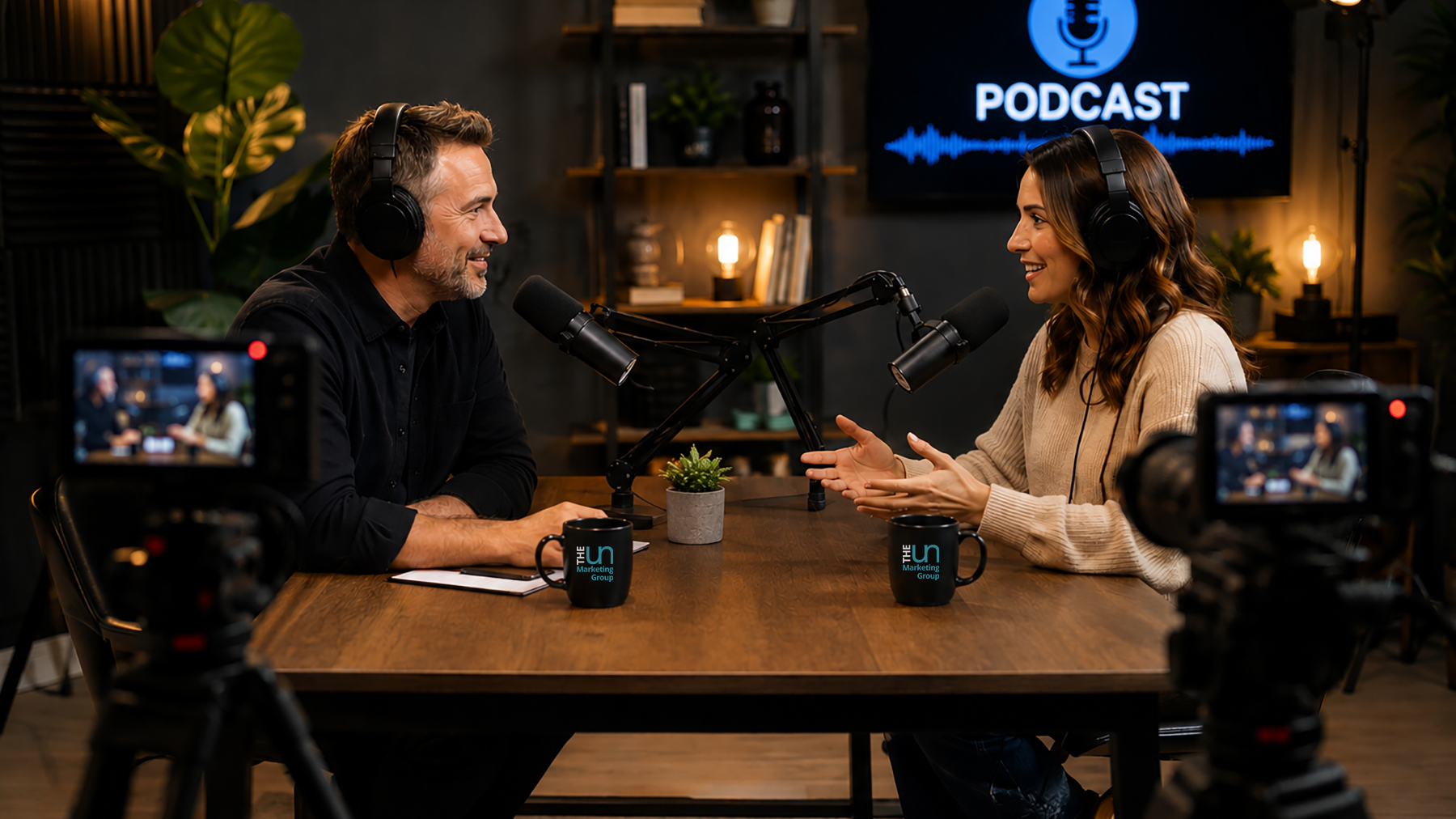
If you host a podcast, you've probably noticed something over the last few years.
More and more podcasts are showing up on YouTube. Podcast clips are filling LinkedIn feeds. Conversations that were once audio-only are now generating thousands of video views.
It's enough to make any podcast host wonder:
"Should I be doing video too?"
The answer is often yes—but not for the reasons most people think.
Video Doesn't Replace Audio
Many podcasters assume that moving to video means abandoning what already works. It doesn't.
Your podcast listeners can continue listening exactly as they always have. The goal isn't to replace your audio audience. It's to expand your reach. Video simply creates another way for people to discover your content.
Someone may never search for your podcast on Spotify or Apple Podcasts. But they might discover a short video clip on LinkedIn, YouTube, or another social platform and become a loyal listener.
The Real Value Isn't the Full Episode
Most podcast hosts focus on the one-hour conversation.
Your audience often discovers you through the one-minute clip.
A single episode can generate:
A full-length video podcast for YouTube
Short clips for LinkedIn and social media
Promotional teasers
Blog content from the transcript
SEO-friendly website articles
Content for newsletters and email campaigns
Suddenly, one recording session becomes weeks of content.
You Don't Need a Television Studio
One of the biggest misconceptions about video podcasting is that it requires a massive production budget.
In reality, many audio podcasters are already doing most of the hard work:
Planning conversations
Booking guests
Creating valuable content
Recording high-quality audio
Adding professional video can often be integrated into your existing workflow.
The key is designing a production process that enhances your existing podcast rather than disrupting it.
The Concern Nobody Talks About
In conversations with podcasters, I've found that the biggest hesitation to video podcasting often isn't technical or financial.
It's personal.
Many hosts are perfectly comfortable speaking into a microphone but feel less confident about being on camera.
And that's completely understandable.
Most of us aren't professional broadcasters, actors, or influencers. We're experts, business owners, educators, and leaders who care more about the conversation than how we look.
What many people don't realize is that they often judge themselves based on their worst camera experiences—video calls, cellphone selfies, or poorly lit photos.
Professional video production is different.
Just as a quality microphone helps you sound your best, professional lighting, camera placement, and lens selection help you look natural and confident on screen.
The goal isn't to change how you look. It's to present you authentically and professionally, allowing the audience to focus on your message rather than distractions.
As video professionals, we spend a lot of time thinking about details our clients never need to worry about:
Lighting
Camera angles
Lens selection
Framing
Backgrounds
Overall visual presentation
Those details help people feel comfortable and confident, so they can focus on having a great conversation.
The truth is that audiences aren't looking for perfection.
They're looking for authenticity, expertise, and meaningful discussions.
Quality Matters
As more podcasts move to video, audiences are becoming more selective.
Poor lighting, weak camera angles, and distracting visuals can undermine an otherwise excellent conversation.
That's why many podcast hosts are choosing to partner with video professionals who can help them maintain their brand quality while allowing them to focus on what they do best: having meaningful conversations.
The Opportunity
If you've been thinking about adding video to your podcast, the question may not be whether you should.
The better question might be:
"How can I add video without creating a completely new production process?"
The good news is that, for many podcasters, the answer is simpler and more affordable than they expect. Your podcast is already creating valuable conversations.
Video simply helps more people discover them.