
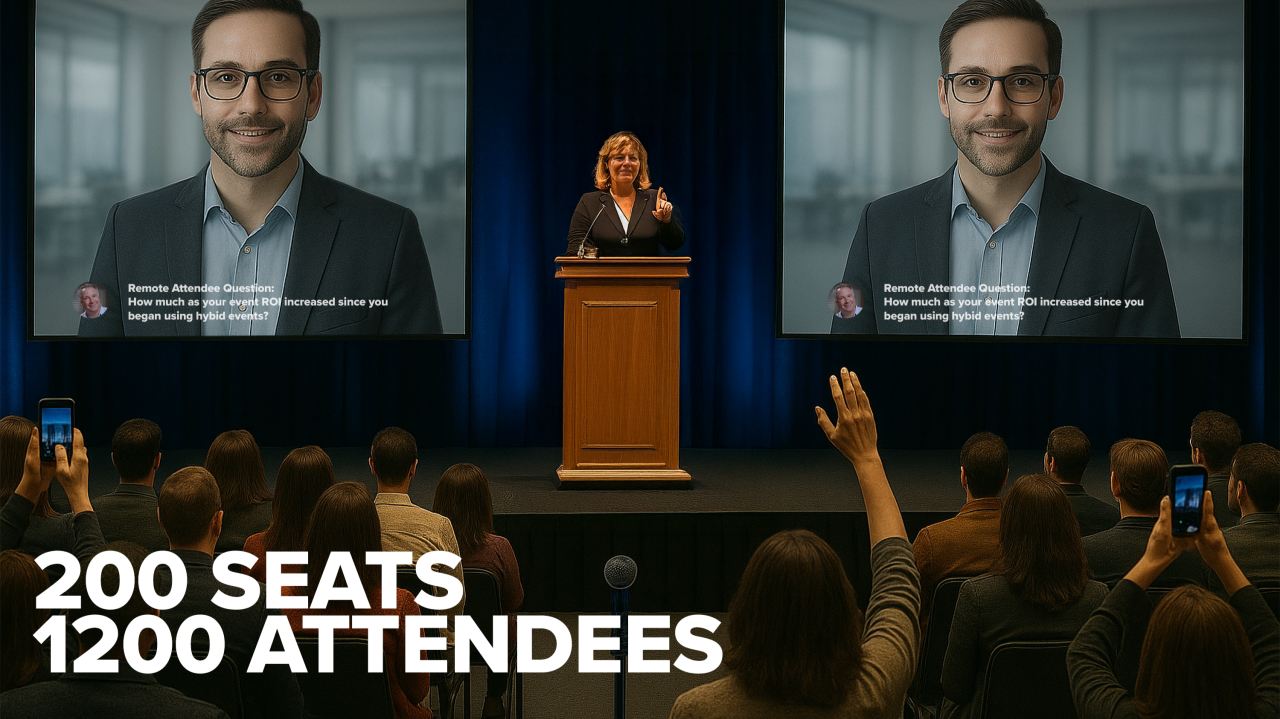
For years, the answer seemed simple: count how many people showed up. If the seats were filled, the event was a success.
But audiences have changed. Some are eager to travel, dress up, and be in the room. Others prefer — or need — to join from wherever they are. If we only measure who’s in the seats, aren’t we overlooking the bigger picture of engagement and impact?
What Hybrid Events Make Possible
Hybrid events blend the strengths of in-person and online experiences into one unified event. They’re not about replacing in-person gatherings — they’re about expanding access and creating more touchpoints for connection.
When done right, hybrid events can:
Bring in speakers from anywhere. No flights, no hotels, no scheduling headaches. Picture an industry leader in London, UK, delivering a live keynote on-screen, then leaning right into the panel conversation happening on stage in Waterloo.
Expand your audience beyond the room. A 200-seat venue doesn’t have to mean 200 attendees. With live streaming and some savvy marketing, your reach can double, triple, or more — while still letting people engage in real time.
Create shared experiences for everyone. Tools like Mentimeter or Slido let you run live polls, gather questions, and show results from both in-room and online guests side by side.
Extend the life of your event content. The keynote and panel discussions that inspired today's event can be repurposed as on-demand videos, highlight reels for social media, and training resources for months to come.
Why Accessibility And Engagement Matter
In-person events can unintentionally exclude important contributors — people who can’t travel due to cost, health, time constraints, or geography. Hybrid bridges the gap and makes participation possible for more people.
For example:
A non-profit fundraiser in Oakville welcomed 150 guests in the room and more than 400 online attendees from across the province. Many of those online attendees donated during the event — support that wouldn’t have happened without the hybrid option.
A tech conference added interactive live-streamed product demos for their virtual audience, resulting in a 30% increase in event-to-lead conversions.
A professional association hosted a hybrid AGM where remote members could vote in real time alongside those in the room, boosting overall participation by 50% compared to previous years.
Is Hybrid More Complicated?
Yes, it is. There are more moving parts — from cameras and streaming to audio and audience interaction. And yes, there’s an added cost.
But here’s the key:
When you factor in expanded reach, improved accessibility, deeper engagement, and the extended life of your event content, the return on investment often outweighs the extra expense many times over — especially when the event is marketed well.
And the best part? You don’t need to become a tech expert to make it work. That’s what experienced production partners are for. We take care of the complexity so you can focus on what matters most: creating a memorable, meaningful experience for your audience — and real value for your sponsors and partners.
Measuring What Matters
If event success is measured only in “bums in seats,” then a hybrid event might feel like a stretch. But when success is measured in connections made, knowledge shared, and people engaged — no matter where they are — hybrid becomes a natural next step.
The real opportunity is to think beyond the walls of your venue. Because your audience isn’t just in the room — they’re everywhere, and they’re ready to be part of the experience.
So here’s the question: How will you measure the real success of your next event? If you’d like to explore what hybrid could look like for you — no pressure, just a conversation — I’d be happy to listen carefully and share some ideas.
Norm Clare